The Importance of the Dark Sky
In the modern era of astrophotography, we often hear that "the sky is no longer the limit," even from the heart of a neon-lit metropolis. With high-end CMOS sensors, narrow-band filters, and sophisticated post-processing algorithms, digital photographers can digitally subtract the orange glow of city lights, revealing nebulae that the naked eye could never perceive from a balcony.
But for those of us committed to analog astrophotography, the rules are different. Film does not have a "subtract background" button.
The Analog Challenge: Contrast and Photons
When you expose a frame of Kodak Portra or Fujifilm Provia under a light-polluted sky, the film's emulsion reacts to every photon it encounters. In a city environment, the sky fog (the scattered light from streetlamps) quickly saturates the silver halide crystals, leading to a washed-out, "fogged" negative long before the subtle light of a distant galaxy can leave its mark.
Digital sensors have a linear response and incredible dynamic range, allowing them to distinguish between a bright background and a slightly brighter star. Film, however, has a chemical limit. To achieve the deep blacks and brilliant stellar contrasts that define a great space photograph, there is no substitute for a naturally dark sky. For the analog photographer, a Bortle 1 or 2 location isn't a luxury – it's a technical necessity.
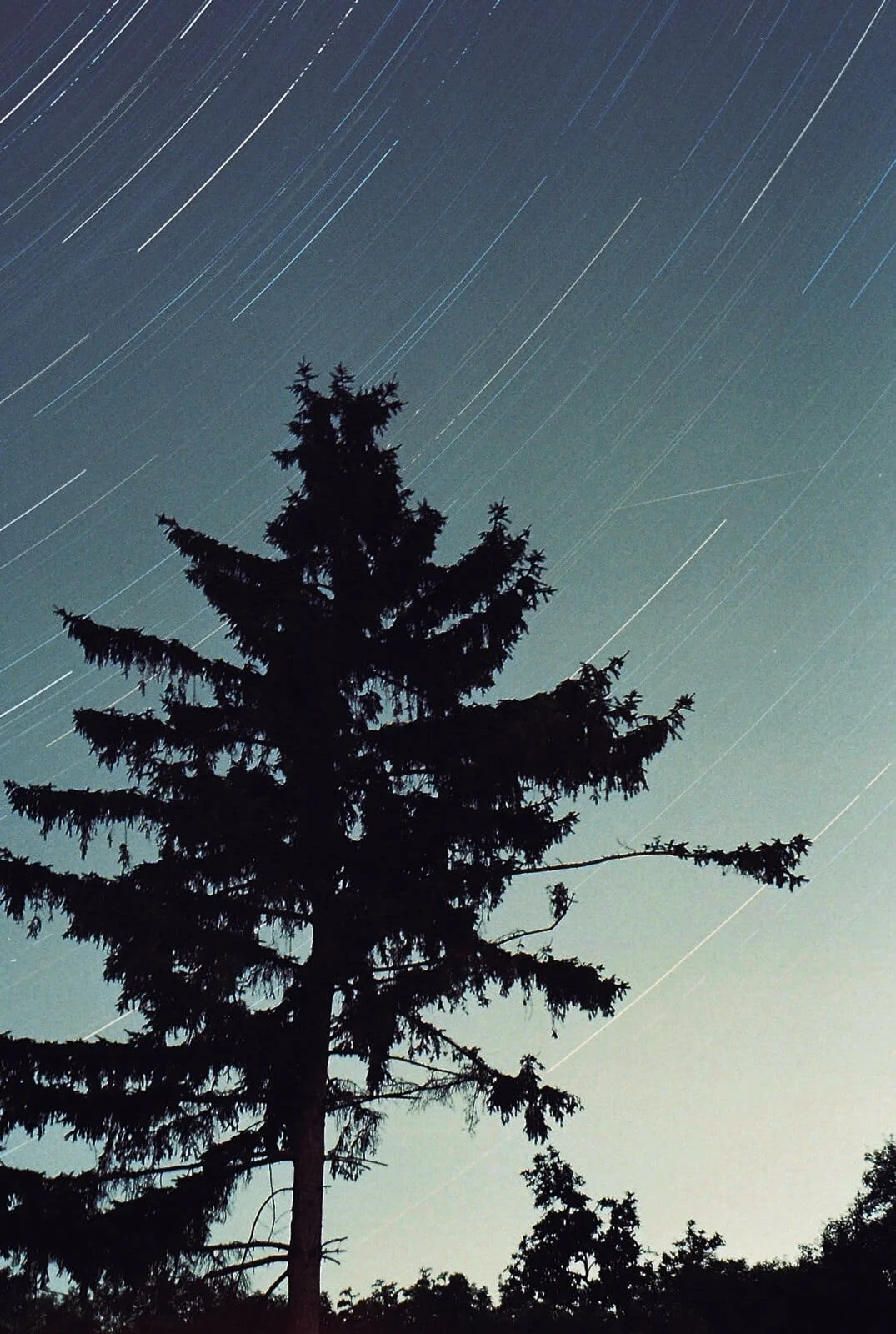
Startrails and light pollution
Zenit 12XP, Helios 2/58, Kodak Gold 200, 90 min @f/4
Sanctuary in the Dark: The Zselic Starry Sky Park
In Hungary, we are fortunate to have one of the most prestigious dark-sky preserves in the world: the Zselic Starry Sky Park (Zselici Csillagoségbolt-park). Its significance cannot be overstated – in 2009, it was the very first location in Europe to receive the "International Starry Sky Park" title from the International Dark-Sky Association (IDA), alongside the Galloway Forest Park in Scotland.
Located within the 10,500-hectare Zselic Landscape Protection Area, this park is a rare bastion against the light pollution of modern civilization. But what makes it a world-class location for a film photographer?
Key Facts and Features of the Zselic:
Bortle Scale Excellence: On the clearest, moonless nights, the sky quality in the heart of the Zselic reaches Bortle Class 2. This means the air is so transparent and free of artificial glow that the Milky Way isn't just a faint smudge – it is a deeply structured, three-dimensional ribbon of light that shows intricate dark nebulae (like the Great Rift) even to the naked eye.
Natural Illumination: The sky is so dark here that the primary light sources are natural: airglow and the combined light of billions of stars. Under these conditions, the Milky Way is prominent enough to cast a subtle, ethereal glow over the landscape, a phenomenon nearly impossible to witness anywhere else in Central Europe.
The Zselic Starry Sky Observatory: Opened in 2015, the park features a state-of-the-art observatory equipped with a 40-centimeter Meade LX200 telescope and a digital planetarium. It serves as both a scientific hub and an educational sanctuary, teaching visitors that the starry sky is a vital part of our human and cultural heritage.
Ecological Importance: The park’s mission goes beyond photography. It protects the nocturnal ecosystem. Many species in the Zselic, from rare insects to nocturnal birds and mammals, rely on absolute darkness for hunting and reproduction. By eliminating light pollution, the park preserves the biological clock of the entire region.
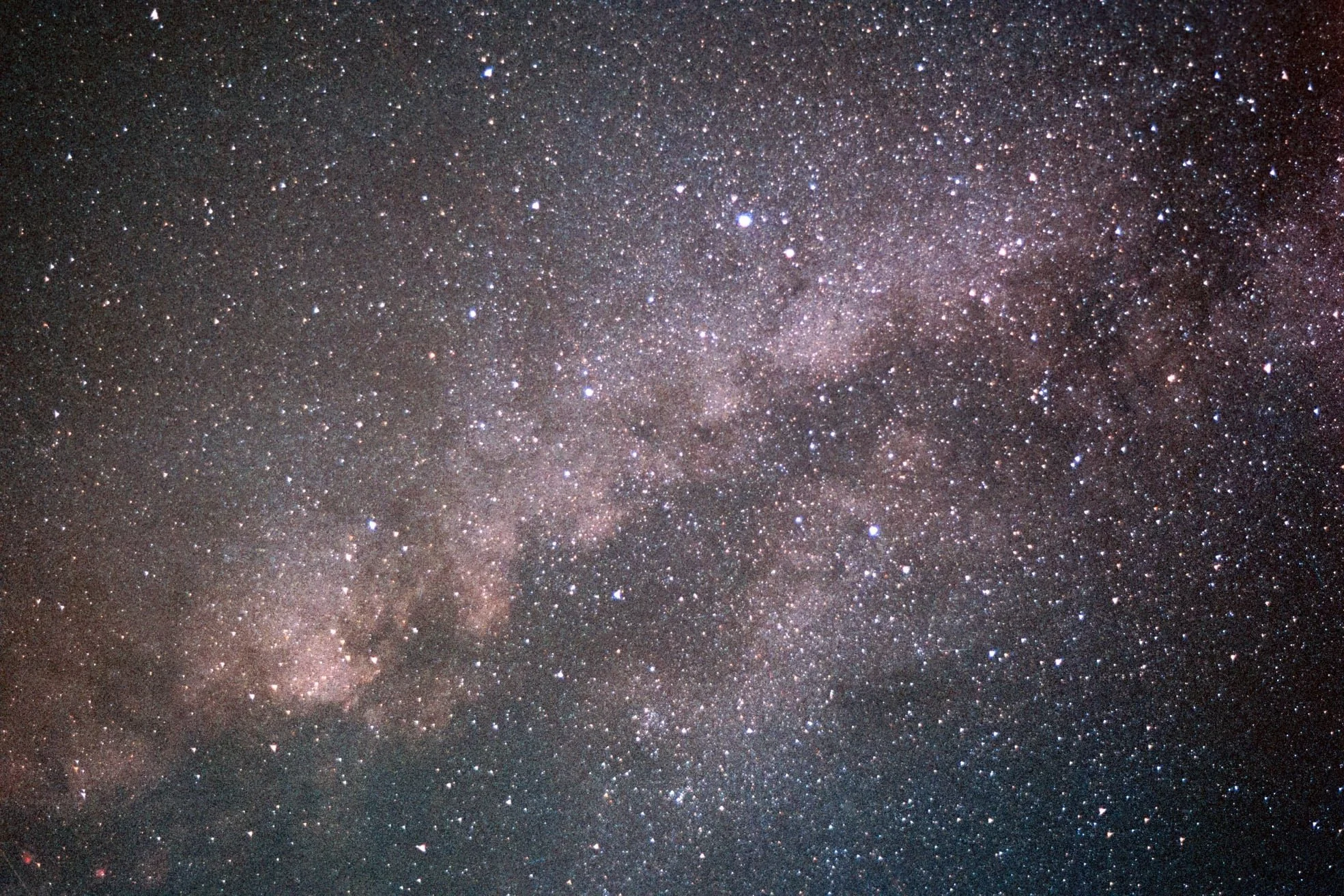
Milky Way of Zselic
Minolta XD 5, Minolta Rokkor 35mm f/2.8, Fujifilm Superia 400, 5 min @f/2.8
My Personal Dark-Sky Studio
The best analog frames I have ever captured – including emission nebulae and star trails found in my gallery – were born in the profound silence of the Zselic.
Setting up a telescope here is a transformative experience. Without the orange veil of sodium-vapor lamps, the atmospheric contrast is significantly higher. This allowed me to push my film to its limits: I could let the emulsion "soak" in starlight for extended periods without the fear of chemical fogging from light pollution. In the Zselic, the negatives came out with a rich, velvety black foundation that provides the perfect canvas for the silver-halide stars to shine.
Preserving these dark places isn't just about photography; it's about preserving our connection to the universe. As analog photographers, we are perhaps the last witnesses to the raw, unfiltered beauty of the cosmos, captured exactly as it reaches us – one photon at a time.
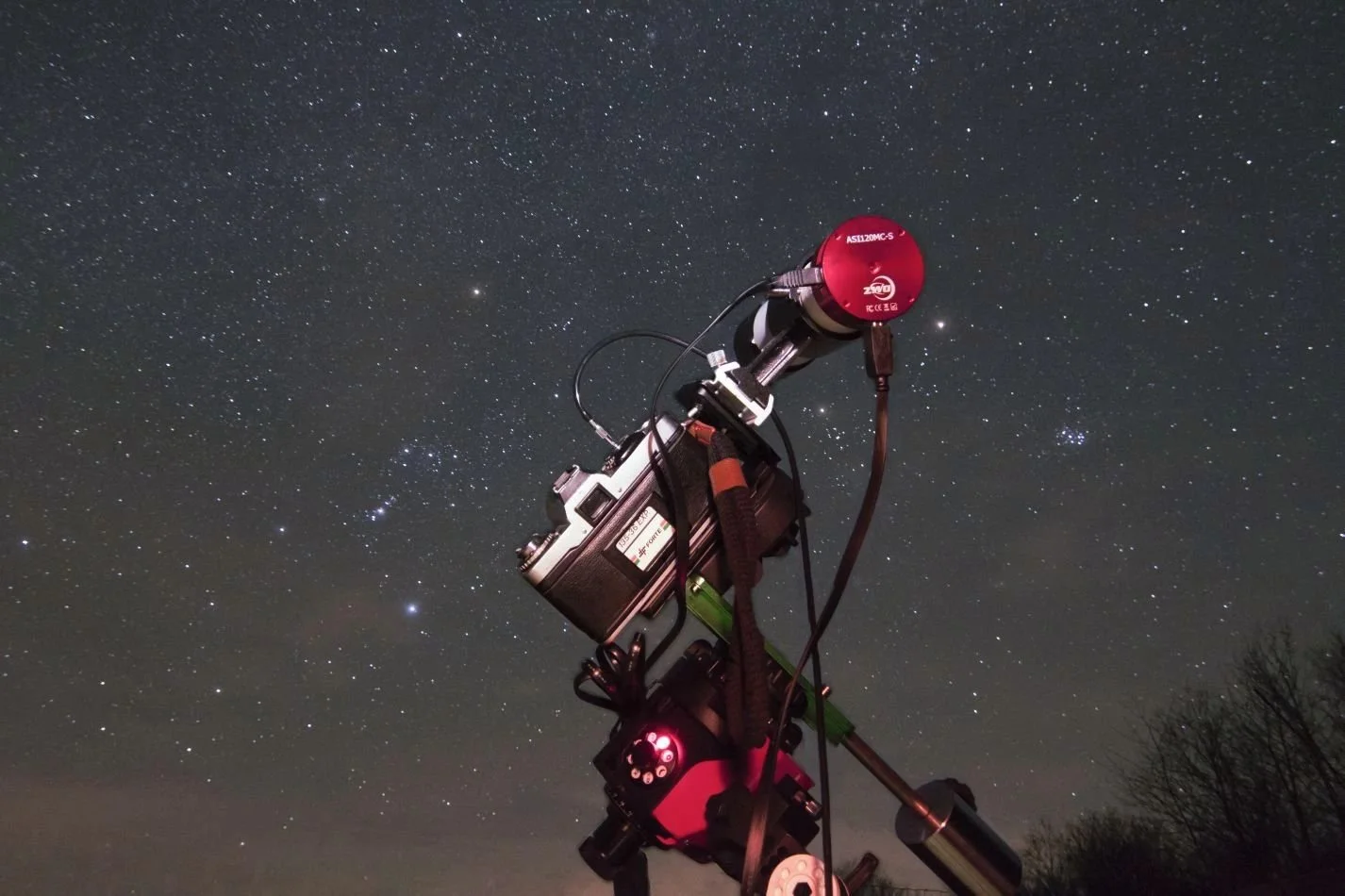
Hunting for Orion in Zselic
