Capturing the Moon on Film
When I decided to merge 20th-century analog technology with the timeless light of the night sky, I quickly realized that the telescope is not just a tool for observation—it is the most powerful lens I own. However, connecting a film camera to a telescope requires more than a simple adapter; it requires an understanding of optical geometry. Based on classic astrophotography principles, let’s explore the two primary methods I use to capture the Moon: Prime Focus and Afocal Projection.
Prime Focus
In prime focus photography, we treat the telescope as a massive telephoto lens. The camera’s own lens is removed, and the camera body is attached directly to the telescope's focuser. The telescope’s objective lens (or primary mirror) projects the image directly onto the film plane. The focal length (F) and the focal ratio (f) of your system are simply those of the telescope itself.
Formula: f = F / Aperture
Example: Using a 1200mm focal length telescope with a 150mm aperture gives you an f/8 system.
One of the most common hurdles, especially with Newtonian reflectors, is having enough "back focus." A film camera typically needs about 5 cm more space than a standard eyepiece to reach focus. If your focuser cannot travel deep enough, the image will remain a blurry disk. This method is better used with refractors or catadioptric telescopes (SC, MC). It still offers the maximum possible brightness and the fewest optical surfaces between the stars and your film, resulting in high-contrast, sharp lunar disks.
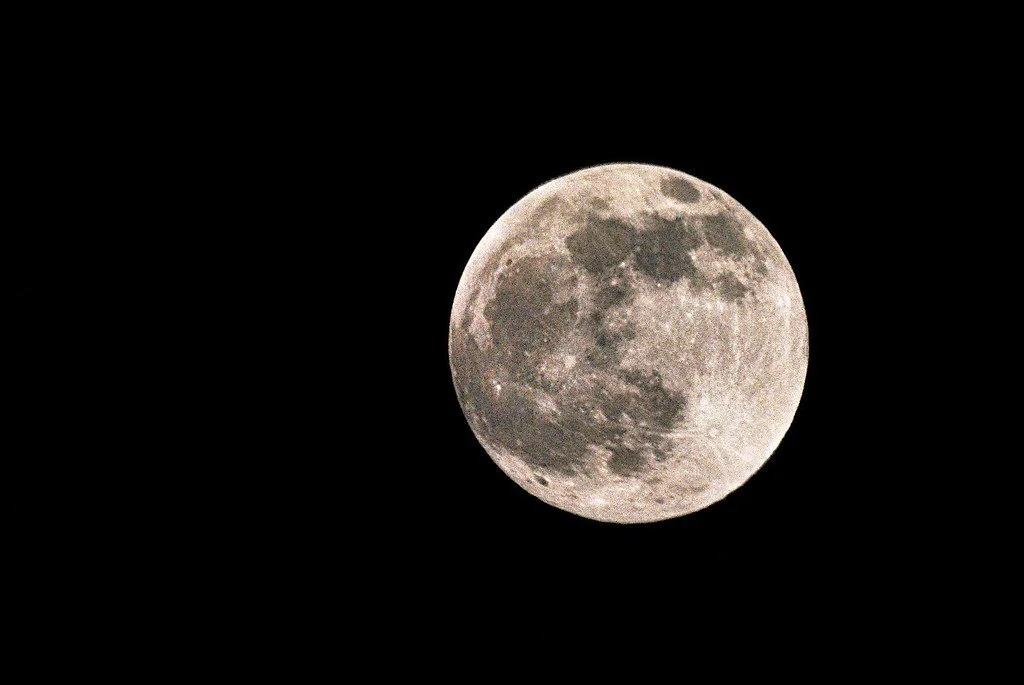
Moon in prime focus with SkyWatcger 102/1300 telescope (Minolta XD 5, Kodak Gold 200, 1/500 sec)
Afocal Projection
If prime focus is like using a telephoto lens, afocal projection is like looking through a magnifying glass with your camera. Here, both the telescope eyepiece and the camera lens remain in place. This method is used when you need extreme magnification to capture specific lunar craters or planets. The effective focal length (F) of the entire system is determined by the magnification of the telescope (M) and the focal length of the camera lens (f_cam)

where

The exit pupil of the telescope must fit within the aperture of the camera lens to avoid heavy vignetting (dark corners). Precise alignment is key – if the camera axis and the telescope axis are even slightly tilted, the image will suffer from aberrations.
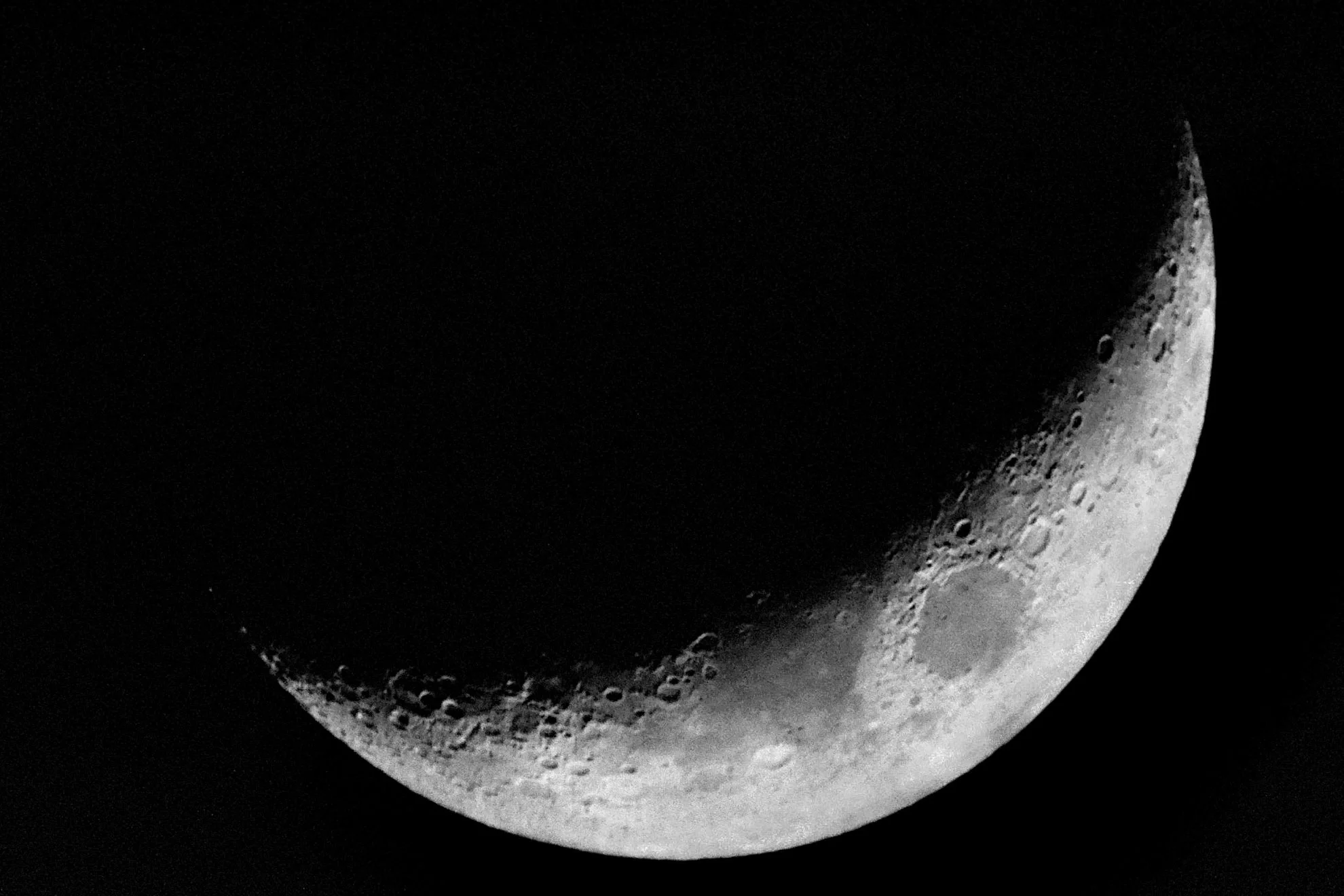
Moon in afocal projection with 102/1300 MC telescope, 25mm eyepiece and 50mm f/2 lens on Minolta XD 5 (Ilford HP5 Plus)
For the image above, I had to precisely calculate the correct exposure time, which required knowing the effective focal length of the system. The telescope used has a focal length of 1300mm, paired with a 25mm eyepiece. My camera was equipped with a 50mm lens. Based on these parameters, the magnification of the telescope-eyepiece combination is 52x; multiplying this by the focal length of the camera lens results in an overall effective focal length of 2600mm for the entire system. From this, it is easy to determine that the setup resulted in an effective focal ratio of f/25.
In finding the correct exposure time, I was greatly assisted by Michael A. Covington’s fantastic volume, 'Astrophotography for the Amateur', which contains an appendix with exposure tables calculated for various celestial objects. Based on these tables, the required exposure time for this specific image was 1/15 of a second.
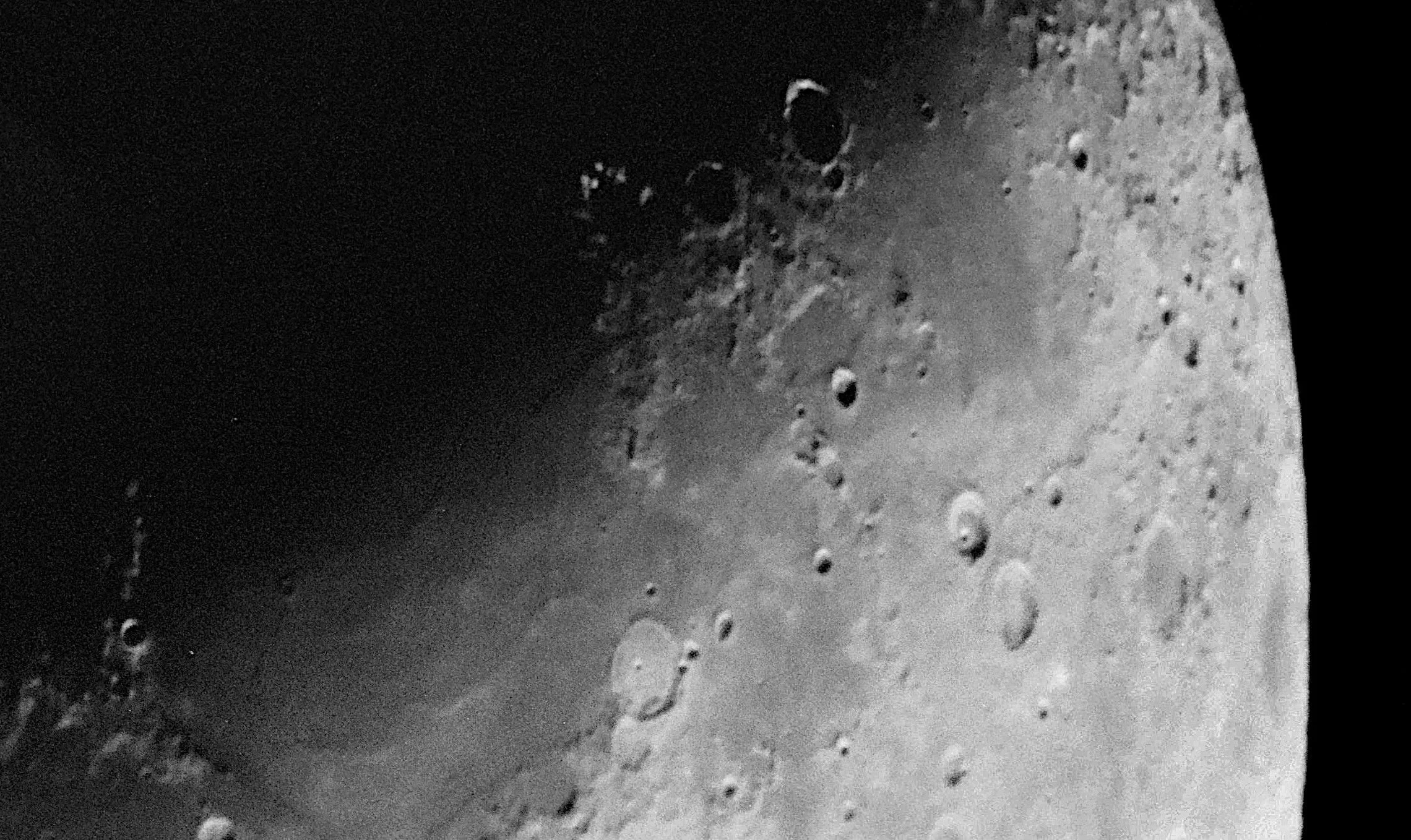
Moon in afocal projection with 102/1300 MC telescope, 10mm eyepiece and 50mm f/2 lens on Minolta XD 5 (Ilford HP5 Plus)
Same situation for the image above but with 10mm eyepice. This gave me 130x magnification, f/64 effective focal ratio and 1/4 sec exposure time.
Conclusion
While digital sensors allow for 'lucky imaging' and the post-capture stacking of hundreds of frames to cancel out noise, analog film forces us to respect the laws of optics from the very moment of exposure. There is no 'undo' button here; only the physical reality of light hitting the emulsion.
Whether I am using the clean, direct path of prime focus for a sharp, high-contrast full disc moon or the complex magnification of afocal projection to dive into the shadows of the Mare Serenitatis, every frame is calculated carefully. This process requires a different kind of patience. One where you must account for the telescope’s focal ratio, the eyepiece’s magnification, and even the mechanical 'back focus' limits of your gear before the shutter ever clicks.
In the end, this method is about more than just the final print. It is about the discipline of the craft: the silent minutes spent calculating effective focal lengths and the tactile sensation of advancing the film, knowing that the image you just captured is a unique, physical record of a moment that occurred hundred thousands of miles away.
